Consider the following statements in the context of interventions being undertaken under Anaemia Mukt Bharat Strategy: 1. It provides prophylactic calcium supplementation for pre-school children, adolescents and pregnant women. 2. It runs a campaign for delayed cord clamping at the time of child-birth. 3. It provides for periodic deworming to children and adolescents. 4. It addresses non-nutritional causes of anaemia in endemic pockets with special focus on malaria, hemoglobinopathies and fluorosis. How many of the statements given above are correct?
Contents17
- AOnly one
- BOnly two
- COnly three
- DAll four
Show answer
Answer: (C) Only three
Statement 1 is wrong:
Iron and Folic Acid supplements are given to ALL women and children under the scheme regardless of whether they have anaemia, not just to those with anaemia (it's prophylactic/preventive).
Statement 2 is correct:
The strategy promotes delayed cord clamping (at least 3 minutes) followed by early breastfeeding within 1 hour of birth.
Statement 3 is correct:
Bi-annual mass deworming is carried out on February 10 and August 10 under NDD, and the scheme extends this to women and pregnant women.
Statement 4 is correct:
The strategy screens for non-nutritional causes of anaemia like malaria, haemoglobinopathies, and fluorosis.
Only three are correct.
Answer is (c).
Anaemia Mukt Bharat covers over 272 million beneficiaries across six life-stage groups, making it one of the world's largest anemia prevention programs.
The strategy was launched in 2018 but gained renewed focus during 2020-2023 as COVID-19 worsened nutritional outcomes, making anemia prevention a policy priority.
The question tests whether students can distinguish between iron-folic acid supplementation (which the scheme actually provides) versus calcium supplementation (which it does not).
Anaemia Mukt Bharat Strategy
Indian Economy Anaemia Mukt Bharat Strategy prophylactic delayed cord clamping deworming non-nutritional causes
Anaemia Mukt Bharat Strategy: Components & UPSC Traps
Launched in 2018 to reduce anaemia prevalence by 3% per year
Provides Iron and Folic Acid supplements, not calcium
Promotes delayed cord clamping for at least 3 minutes
Addresses both nutritional and non-nutritional causes of anaemia
Includes bi-annual deworming on February 10 and August 10
Anaemia Mukt Bharat is a comprehensive strategy to tackle anaemia across all age groups through prophylactic supplementation, institutional interventions, and addressing root causes. The strategy targets a 3% annual reduction in anaemia prevalence.
Key Interventions
Intervention | Target Group | Details | Frequency |
|---|---|---|---|
Iron & Folic Acid Supplementation | Children (6-59 months), Adolescents, Pregnant & Lactating Women | Prophylactic tablets/syrup | Daily/Weekly basis |
Delayed Cord Clamping | Newborns | Clamping after 3+ minutes | At every delivery |
Deworming | Children & Adolescents | Mass deworming campaign | Feb 10 & Aug 10 annually |
Screening & Treatment | All age groups | Non-nutritional causes | Regular health checkups |
Non-Nutritional Causes Addressed
Malaria: Screening and treatment in endemic areas
Haemoglobinopathies: Genetic disorders like sickle cell anaemia and thalassemia
Fluorosis: Excess fluoride intake causing anaemia in endemic pockets
Hookworm infections: Addressed through deworming campaigns
Connection to This Question
This question tests knowledge of specific interventions. The trap is Statement 1 - the strategy provides Iron and Folic Acid, not calcium supplementation.
Trap: Statement 1 mentions calcium supplementation - AMB provides Iron and Folic Acid
Don't confuse with other schemes - ICDS provides calcium, AMB focuses on iron
Delayed cord clamping is a medical intervention, not just nutritional supplementation
Deworming extends beyond children to adolescents and pregnant women under AMB
Iron & Folic Acid Supplementation
Indian Economy prophylactic Iron Folic Acid supplementation
Iron & Folic Acid Supplementation: Prophylactic vs Therapeutic
Iron deficiency is the leading cause of anaemia globally
Prophylactic means preventive supplementation before anaemia develops
Folic Acid prevents neural tube defects and megaloblastic anaemia
Prophylactic supplementation means giving supplements to prevent anaemia, not just treating existing cases. This approach targets vulnerable groups before they develop deficiency.
IFA Supplementation Schedule
Target Group | Iron Dose | Folic Acid Dose | Frequency |
|---|---|---|---|
Children 6-59 months | 20mg | 50mcg | Weekly |
Children 5-9 years | 45mg | 400mcg | Weekly |
Adolescents 10-19 years | 100mg | 500mcg | Weekly |
Pregnant Women | 100mg | 500mcg | Daily |
Lactating Women | 100mg | 500mcg | Daily |
Why Iron & Folic Acid Together
Iron: Essential for haemoglobin formation and oxygen transport
Folic Acid: Required for DNA synthesis and red blood cell formation
Synergistic effect: Both needed for healthy red blood cell production
Prevention focus: Given to all vulnerable groups, not just anaemic individuals
Don't confuse Iron supplementation with Calcium - different micronutrients
Prophylactic means preventive, not treatment of existing anaemia
All target groups get supplements, regardless of current anaemia status
Delayed Cord Clamping
Indian Economy delayed cord clamping child-birth
Delayed Cord Clamping: Medical Intervention for Anaemia Prevention
Delayed cord clamping means waiting 3+ minutes before cutting umbilical cord
Increases iron stores in newborns by up to 50%
Recommended by WHO and part of AMB Strategy
Delayed cord clamping allows continued blood flow from placenta to baby, transferring additional 30-40ml of blood containing iron-rich red blood cells.
Process & Benefits
%%{init: {"flowchart": {"wrappingWidth": 460}}}%%
flowchart TD
  s1["`**Normal Delivery**
Baby born, umbilical cord still attached`"]
  s2["`**Wait 3+ Minutes**
Allow continued placental blood flow to baby`"]
  s3["`**Cord Clamping**
Cut cord after adequate blood transfer`"]
  s4["`**Increased Iron Stores**
Baby has 30-50% more iron reserves`"]
  s5["`**Reduced Anaemia Risk**
Lower chance of iron deficiency in first 6 months`"]
  s1 --> s2
  s2 --> s3
  s3 --> s4
  s4 --> s5
Medical Evidence
Iron stores: Babies get additional 40-50mg of iron from delayed clamping
WHO recommendation: Wait at least 1-3 minutes before clamping
Reduced anaemia: 50% lower risk of iron deficiency at 3-6 months
No harm: Safe practice with minimal complications
Medical intervention, not just nutritional - involves birth practices
3+ minutes is the recommended duration, not immediate clamping
Part of institutional delivery protocols under AMB
National Deworming Day & Anaemia
Indian Economy deworming children and adolescents
National Deworming Day: Addressing Worm-Induced Anaemia
National Deworming Day observed on February 10 & August 10
Hookworms cause anaemia by feeding on blood in intestines
Albendazole tablets given to children and adolescents
Soil-transmitted helminths like hookworms cause anaemia by feeding on blood in the intestinal wall. Mass deworming is a cost-effective intervention to reduce worm burden.
Deworming Under AMB
Aspect | Details | AMB Extension |
|---|---|---|
Target Group | Children 1-19 years | Extended to pregnant women |
Dates | February 10 & August 10 | Same bi-annual schedule |
Medicine | Albendazole 400mg | Single dose tablet |
Coverage | Schools, Anganwadis | Health facilities added for women |
Link to Anaemia
Hookworm anaemia: Adult hookworms consume 0.2ml blood per day
Heavy infections: Can lead to severe iron-deficiency anaemia
Vulnerable groups: Children and pregnant women most affected
Preventive approach: Regular deworming prevents worm-induced blood loss
AMB extends deworming beyond just children to pregnant women
Bi-annual schedule - Feb 10 & Aug 10, not just once yearly
Addresses non-nutritional cause of anaemia, not just iron deficiency
Non-Nutritional Causes of Anaemia
Indian Economy non-nutritional causes malaria hemoglobinopathies fluorosis
Non-Nutritional Causes: Beyond Iron Deficiency
60-70% of anaemia is nutritional, 30-40% has other causes
Malaria destroys red blood cells causing acute anaemia
Haemoglobinopathies are genetic disorders affecting haemoglobin
Fluorosis causes chronic anaemia in high-fluoride areas
Non-nutritional anaemia requires different interventions than iron supplementation. AMB Strategy recognizes that treating only iron deficiency won't solve anaemia in endemic pockets.
Major Non-Nutritional Causes
Cause | Mechanism | Endemic Areas in India | AMB Intervention |
|---|---|---|---|
Malaria | Destroys RBCs, reduces production | Odisha, Jharkhand, Chhattisgarh | Screening, rapid treatment |
Sickle Cell Disease | Abnormal haemoglobin shape | Tribal areas of Central India | Genetic screening, counseling |
Thalassemia | Reduced haemoglobin production | Punjab, Gujarat, Maharashtra | Early detection, blood transfusion |
Fluorosis | Chronic fluoride toxicity | Rajasthan, Haryana, Andhra Pradesh | Water quality improvement |
AMB Approach to Non-Nutritional Causes
Screening protocols: Rapid diagnostic tests for malaria and haemoglobinopathies
Endemic mapping: Focus on high-prevalence districts
Integrated approach: Combines nutrition with disease management
Referral systems: Link primary care with specialist treatment
Anaemia Endemic Map
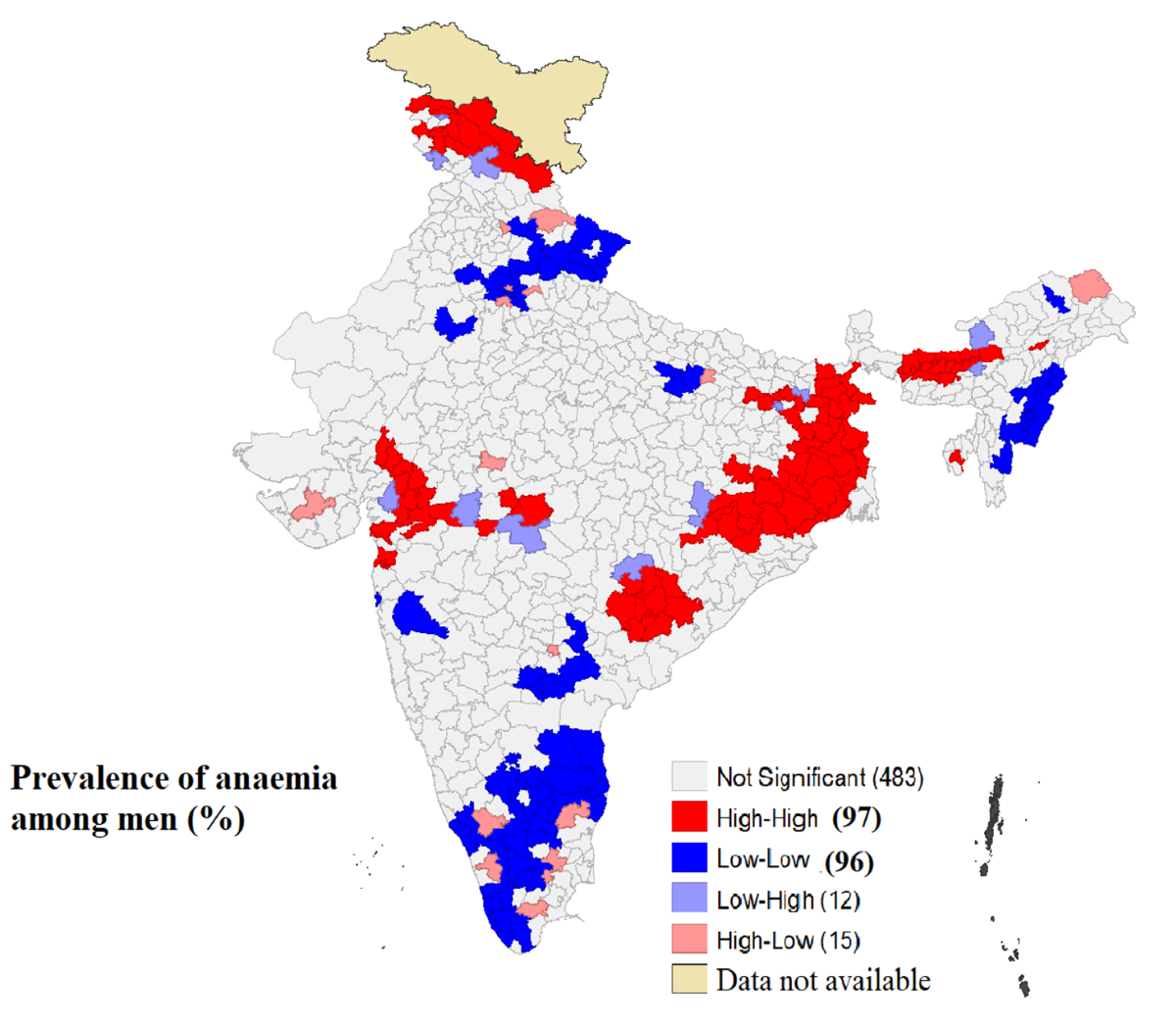
Source: Springer Nature — A district-level geospatial analysis of anaemia prevalence among ... · link.springer.com
Non-nutritional doesn't mean non-medical - includes diseases and genetic disorders
Endemic pockets have specific geographic concentration of these causes
Fluorosis is often overlooked but significant in Rajasthan and Haryana
Haemoglobinopathies include both sickle cell disease and thalassemia