Ball bearings are used in bicycles, cars, etc., because
Contents16
- Athe actual area of contact between the wheel and axle is increased
- Bthe effective area of contact between the wheel and axle is increased
- Cthe effective area of contact between the wheel and axle is reduced
- DNone of the above statements is correct
Show answer
Answer: (C) the effective area of contact between the wheel and axle is reduced
Ball bearings work by two mechanisms:
(1) They convert sliding friction into rolling friction — rolling friction is much lower than sliding friction.
(2) The roundness of the ball bearings creates less contact between the bearing and the surface it moves against — i.e., the effective area of contact is reduced. A reduction in contact area means less friction.
So option (c) is correct.
Options (a) and (b) say the contact area is 'increased' — this is the opposite of what happens and would actually increase friction, not reduce it.
Ball bearings reduce friction by two mechanisms: converting sliding friction to rolling friction, and reducing the contact area between surfaces.
The spherical shape of ball bearings creates point contact instead of surface contact, which minimizes the effective area where friction occurs.
Ball Bearings - Friction Reduction Mechanism
Science And Technology Ball bearings contact wheel and axle
Ball Bearings: How They Reduce Friction Through Contact Area & Rolling Motion
Ball bearings reduce effective contact area between moving surfaces
They convert sliding friction into rolling friction (much lower)
Spherical shape creates point contact instead of surface contact
Used in bicycles, cars, machinery to improve mechanical efficiency
Why Ball Bearings Work
Ball bearings solve the problem of high friction between rotating parts. Without bearings, a wheel would slide directly against its axle, creating enormous resistance and heat. Ball bearings use two clever principles to minimize this friction and make rotation smooth and efficient.
How Ball Bearings Reduce Friction
%%{init: {"flowchart": {"wrappingWidth": 460}}}%%
flowchart TD
  s1["`**Spherical Contact**
Round ball bearings create **point contact** instead of surface-to-surface sliding`"]
  s2["`**Reduced Contact Area**
**Effective contact area** between wheel and axle becomes minimal`"]
  s3["`**Rolling Motion**
Balls **roll** instead of slide, converting sliding friction to rolling friction`"]
  s4["`**Lower Friction**
**Rolling friction** is typically 10-100 times lower than sliding friction`"]
  s1 --> s2
  s2 --> s3
  s3 --> s4
Sliding vs Rolling Friction
Type | Contact | Friction Level | Example |
|---|---|---|---|
Sliding Friction | Surface-to-surface contact | High resistance | Dragging a box on floor |
Rolling Friction | Point contact (ball bearings) | Very low resistance | Rolling a ball on floor |
Ball Bearing Structure
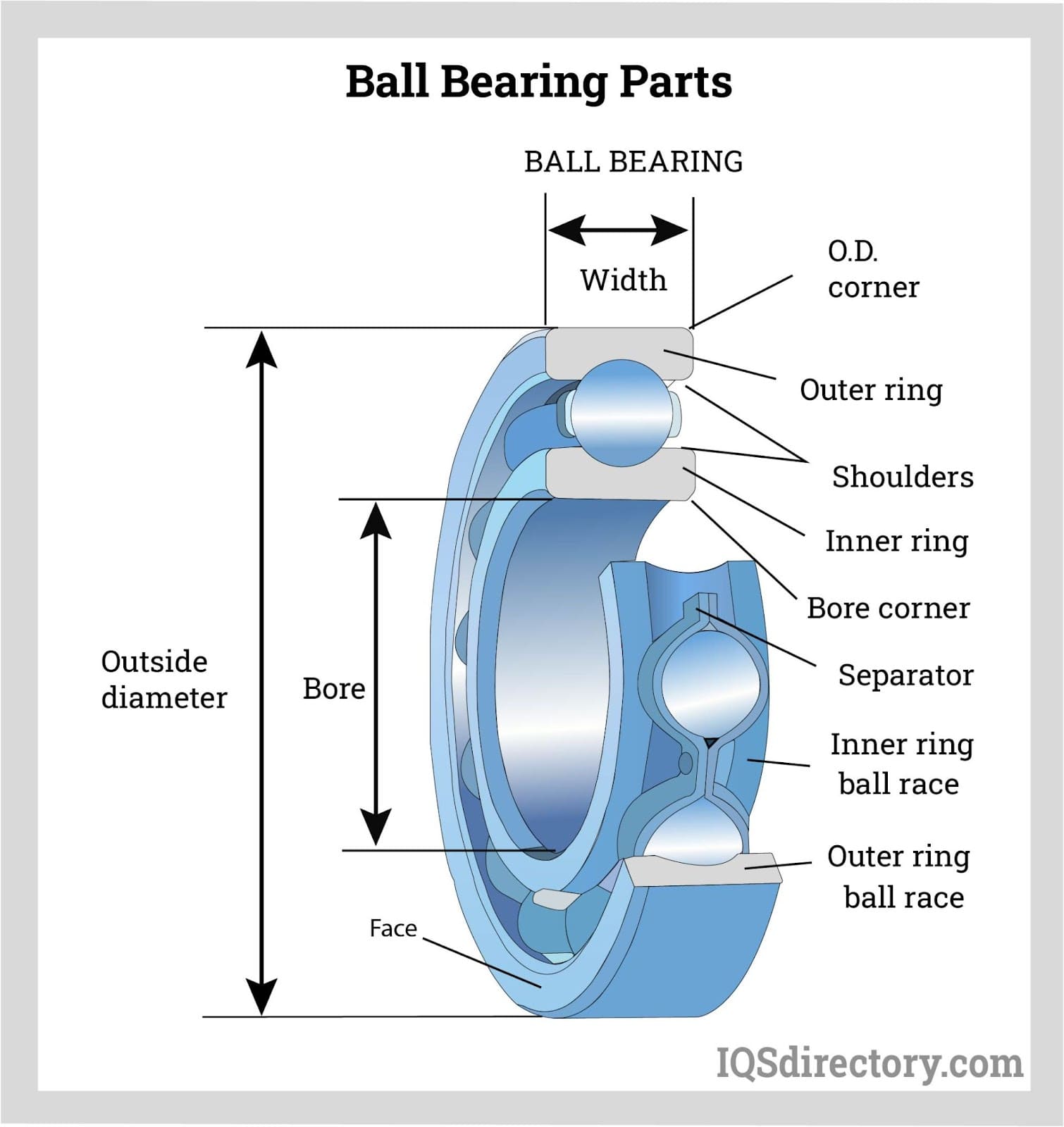
Source: IQS Directory — Types, Design, Applications and Benefits of Ball Bearings · www.iqsdirectory.com
Question Connection
This UPSC question tested understanding of the contact area principle. Many students incorrectly think bearings work by increasing contact area for better grip, but the opposite is true — they reduce contact area to minimize friction.
Trap: Options A & B claim bearings increase contact area — this would actually increase friction, not reduce it
Common confusion: Thinking more contact area = less friction (wrong for bearings)
Key insight: Ball bearings work by minimizing contact, not maximizing it
Remember: Spherical shape creates point contact, not surface contact
Types of Friction - Sliding vs Rolling
Science And Technology friction sliding friction rolling friction
Types of Friction: Understanding Sliding, Rolling & Static Friction
Rolling friction is 10-100 times lower than sliding friction
Static friction prevents motion, kinetic (sliding) friction opposes ongoing motion
Ball bearings exploit the rolling vs sliding friction difference
Friction depends on surface roughness and normal force
Friction Fundamentals
Friction is the force that opposes motion between surfaces in contact. The amount of friction depends on surface properties and the type of motion involved. Understanding different friction types explains why ball bearings are so effective.
Friction Types Comparison
Friction Type | Motion State | Relative Magnitude | Examples |
|---|---|---|---|
Static Friction | No motion (prevents sliding) | Highest | Book on inclined plane before it slides |
Sliding Friction | Surface sliding over surface | High | Dragging furniture, car brakes |
Rolling Friction | Object rolling on surface | Very Low | Ball bearings, wheels, cylinders |
Why Rolling Friction is Lower
Deformation area: Rolling objects deform over small area, sliding objects over entire contact surface
Energy loss: Rolling motion wastes less energy as heat compared to sliding
Molecular adhesion: Less molecular bonding between surfaces in rolling contact
Surface wear: Rolling causes minimal surface damage, sliding causes significant wear
Friction in Daily Applications
# Friction Applications
## High Friction Needed
- Car brakes
- Shoe soles
- Climbing equipment
- Sandpaper
## Low Friction Needed
- Ball bearings
- Ice skating
- Lubricated engines
- Conveyor belts
## Friction Reduction Methods
- Lubrication
- Ball/roller bearings
- Smooth surfaces
- Air cushionsTrap: Confusing static friction (prevents motion) with kinetic friction (opposes ongoing motion)
Common error: Thinking higher contact area always means higher friction (not true for rolling)
UPSC favorite: Questions mixing up sliding vs rolling friction mechanisms
Remember: Rolling friction coefficient is typically 0.001-0.01, sliding is 0.1-1.0
Bearing Systems in Mechanical Engineering
Science And Technology bicycles cars
Bearing Systems: From Bicycles to Industrial Machinery
Bearings are used wherever rotational motion needs to be smooth and efficient
Ball bearings for light loads, roller bearings for heavy loads
Modern vehicles use sealed bearings with integrated lubrication
Bearing failure causes increased friction, heat, and mechanical breakdown
Universal Application
From simple bicycle wheels to complex jet engines, bearing systems are essential for any rotating machinery. They enable smooth motion while minimizing energy loss and mechanical wear.
Bearings in Common Applications
Application | Bearing Type | Key Requirement | Typical Lifespan |
|---|---|---|---|
Bicycle wheels | Ball bearings | Light weight, smooth rolling | 5-10 years |
Car wheels | Tapered roller bearings | High load capacity, durability | 100,000+ km |
Electric motors | Deep groove ball bearings | High speed, low noise | 20,000+ hours |
Industrial machinery | Cylindrical roller bearings | Heavy loads, precision | Variable with maintenance |
Bearing Classifications
# Bearing Types
## Ball Bearings
- Deep groove
- Angular contact
- Self-aligning
- Thrust bearings
## Roller Bearings
- Cylindrical
- Tapered
- Spherical
- Needle bearings
## Specialized Bearings
- Magnetic bearings
- Air bearings
- Fluid bearings
- Jewel bearings
Engineering Considerations
Load capacity: Roller bearings handle heavier loads than ball bearings of same size
Speed limits: Ball bearings typically operate at higher speeds than roller bearings
Lubrication: Critical for bearing life - grease for sealed systems, oil for high-speed applications
Precision grades: Higher precision bearings (ABEC ratings) for applications requiring exact positioning
Don't confuse: Ball bearings reduce contact area, but roller bearings actually increase it (for load distribution)
UPSC could test: Difference between radial bearings (perpendicular loads) vs thrust bearings (axial loads)
Common mistake: Thinking all bearings work the same way - principles vary by bearing type