With reference to India's satellite launch vehicles, consider the following statements: 1. PSLVs launch the satellite useful for Earth resources monitoring whereas GSLVs are designed mainly to launch communication satellites. 2. Satellites launched by PSLV appear to remain permanently fixed in the same position in the sky, as viewed from a particular location in Earth. 3. GSLV Mk III is a four-staged launch vehicle with the first and third stages using solid rocket motors; and the second and fourth stages using liquid rocket engines. Which of the statements given above is/are correct?
Contents16
- A1 only
- B2 and 3
- C1 and 2
- D3 only
Show answer
Answer: (A) 1 only
Correct Answer: (a) 1 only
Statement 1 is CORRECT: PSLV (Polar Satellite Launch Vehicle) is designed to launch earth observation/remote sensing satellites into Sun-Synchronous Polar Orbits (orbits that pass over the poles). These satellites are used for earth resource monitoring, weather forecasting, and surveillance.
Statement 2 is WRONG: GSLV (Geosynchronous Satellite Launch Vehicle) uses a cryogenic engine (uses liquid hydrogen and liquid oxygen as fuel at very low temperatures). However, the statement claims GSLV uses only solid and liquid fuel engines and no cryogenic engine — this is false. The cryogenic upper stage is the defining feature of GSLV. India developed its own cryogenic engine after Russia backed out of a technology transfer deal.
Statement 3 is WRONG: PSLV CAN place satellites in Geostationary Transfer Orbit (GTO) too, though with smaller payloads. PSLV is a versatile workhorse — while it's mainly for polar orbits, it has successfully launched satellites into GTO as well (e.g., PSLV-XL variant).
REMEMBER:
- PSLV = polar orbits (earth observation satellites) — India's reliable workhorse.
- GSLV = geostationary orbits (communication satellites) — uses cryogenic engine.
- PSLV can also do GTO with smaller payloads.
- Key fact: GSLV HAS a cryogenic engine (India developed it indigenously).
PSLV launches satellites for earth monitoring into polar orbits, while GSLV launches heavier communication satellites into geostationary orbits using cryogenic engines.
India's indigenous cryogenic engine development became crucial after Russia withdrew from technology transfer in the 1990s due to US pressure.
The question tests understanding of orbit types and engine technologies, not just which rocket launches what payload.
PSLV - Polar Satellite Launch Vehicle
Science And Technology PSLV Earth resources monitoring satellite
PSLV: India's Workhorse for Earth Observation Satellites
PSLV launches satellites for Earth resources monitoring into polar orbits
Primary orbit: Sun-Synchronous Polar Orbit (passes over poles)
Can also launch into Geostationary Transfer Orbit with smaller payloads
India's most reliable launch vehicle with 50+ successful missions
What is PSLV
PSLV (Polar Satellite Launch Vehicle) is ISRO's reliable workhorse designed primarily for launching Earth observation satellites into Sun-Synchronous Polar Orbits. These orbits pass over Earth's poles, allowing satellites to observe the entire planet as it rotates below.
PSLV Variants & Capabilities
Variant | Payload Capacity | Primary Use | Key Feature |
|---|---|---|---|
PSLV-Standard | Up to 1,750 kg to SSO | Remote sensing satellites | Basic configuration |
PSLV-CA (Core Alone) | Up to 1,100 kg to SSO | Smaller satellites | No strap-on boosters |
PSLV-XL | Up to 1,800 kg to SSO | Heavier payloads, GTO missions | Larger strap-on motors |
PSLV-DL | Up to 1,750 kg to SSO | Standard missions | Two strap-on boosters |
Key Mission Types
Remote sensing satellites: Cartosat, ResourceSat, OceanSat series for mapping and monitoring
Navigation satellites: IRNSS constellation for India's GPS system
Scientific missions: Chandrayaan-1 (Moon), Mars Orbiter Mission (Mangalyaan)
Foreign satellites: Commercial launches for international customers
Small satellite constellations: Multiple satellites in single launch
Trap: PSLV satellites do NOT remain fixed in sky - only geostationary satellites do that
Trap: PSLV can launch into GTO too, not just polar orbits (PSLV-XL variant)
Confusion: Don't mix PSLV (polar orbits) with GSLV (geostationary orbits) - different purposes
GSLV - Geosynchronous Satellite Launch Vehicle
Science And Technology GSLV communication satellites
GSLV: Heavy-Lift Vehicle for Communication Satellites
GSLV launches communication satellites into geostationary orbits
Uses cryogenic engine (liquid hydrogen + liquid oxygen)
GSLV Mk III is India's heaviest launch vehicle
Satellites appear fixed in sky when in geostationary orbit
GSLV Purpose
GSLV is designed to launch heavy communication satellites into Geostationary Transfer Orbit (GTO). The defining feature is its cryogenic upper stage engine that uses liquid hydrogen and liquid oxygen as fuel at extremely low temperatures.
GSLV Variants
Variant | Payload to GTO | Cryogenic Stage | Key Achievement |
|---|---|---|---|
GSLV Mk I | Up to 1,500 kg | Russian cryogenic stage | Early GSLV missions |
GSLV Mk II | Up to 2,200 kg | Indigenous cryogenic stage | First successful Indian cryogenic |
GSLV Mk III | Up to 4,000 kg | CE-20 cryogenic engine | Heaviest Indian launcher |
Cryogenic Engine Development
%%{init: {"flowchart": {"wrappingWidth": 460}}}%%
flowchart TD
  s1["`**1991: Russia Agreement**
Technology transfer deal signed with Russia`"]
  s2["`**1992: US Sanctions**
USA pressures Russia to back out of deal`"]
  s3["`**1994-2014: Indigenous Development**
India develops own cryogenic engine technology`"]
  s4["`**2014: Success**
GSLV Mk II successful with Indian cryogenic stage`"]
  s1 --> s2
  s2 --> s3
s3 --> s4Trap: GSLV HAS cryogenic engine - any statement saying it uses only solid/liquid is wrong
Trap: Satellites in geostationary orbit appear fixed in sky, not those launched by PSLV
Key fact: India developed cryogenic engine indigenously after Russian deal failed
Satellite Orbits & Characteristics
Science And Technology permanently fixed same position in the sky
Satellite Orbits: Geostationary vs Polar vs Sun-Synchronous
Geostationary satellites appear fixed in sky - orbit matches Earth's rotation
Polar orbit satellites pass over poles, cover entire Earth surface
Sun-Synchronous orbit maintains constant sun angle for imaging
Major Satellite Orbit Types
Orbit Type | Altitude | Appears Fixed in Sky? | Primary Use | Launch Vehicle |
|---|---|---|---|---|
Geostationary Orbit (GEO) | 35,786 km | Yes - matches Earth rotation | Communication, weather satellites | GSLV |
Sun-Synchronous Orbit (SSO) | 600-800 km | No - passes overhead twice daily | Earth observation, remote sensing | PSLV |
Polar Orbit | 200-1000 km | No - covers poles | Weather monitoring, reconnaissance | PSLV |
Low Earth Orbit (LEO) | 160-2000 km | No - fast orbital period | ISS, imaging satellites | Both |
Why Geostationary Satellites Appear Fixed
A geostationary satellite orbits at exactly 35,786 km above the equator with an orbital period of 24 hours - matching Earth's rotation. This makes it appear stationary from any point on Earth's surface, perfect for communication satellites that need constant coverage.
Orbital Comparison
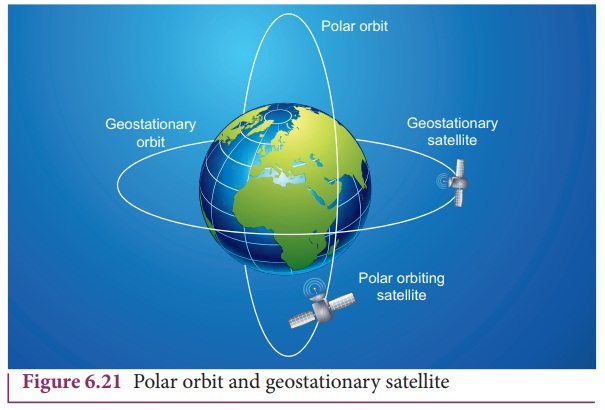
Source: BrainKart — Geo-stationary and polar satellite · www.brainkart.com
Major trap: Only GSLV-launched geostationary satellites appear fixed in sky
Trap: PSLV satellites are in polar/sun-synchronous orbits - they move across the sky
Remember: Fixed position = Geostationary orbit = Communication satellites = GSLV
GSLV Mk III Technical Configuration
Science And Technology GSLV Mk III four-staged solid rocket motors liquid rocket engines
GSLV Mk III: Stage Configuration & Propulsion Systems
GSLV Mk III is three-staged, not four-staged
Stage 1: Two solid strap-on boosters (S200)
Stage 2: Liquid core stage (L110)
Stage 3: Cryogenic upper stage (C25)
GSLV Mk III Stage Details
Stage | Name | Propulsion Type | Fuel | Function |
|---|---|---|---|---|
Stage 1 | S200 (2 boosters) | Solid | Solid propellant | Initial thrust, liftoff |
Stage 2 | L110 | Liquid | Liquid fuel + oxidizer | Main acceleration phase |
Stage 3 | C25 | Cryogenic | Liquid hydrogen + liquid oxygen | Final orbital insertion |
GSLV Mk III Launch Sequence
%%{init: {"flowchart": {"wrappingWidth": 460}}}%%
flowchart TD
  s1["`**Liftoff**
**S200 solid boosters** provide initial thrust`"]
  s2["`**Booster Separation**
Solid boosters separate after fuel exhaustion`"]
  s3["`**L110 Ignition**
**Liquid core stage** takes over propulsion`"]
  s4["`**Core Separation**
L110 separates, **cryogenic stage** ignites`"]
  s5["`**Orbital Insertion**
**C25 cryogenic engine** places satellite in orbit`"]
  s1 --> s2
  s2 --> s3
  s3 --> s4
  s4 --> s5
Key Technical Facts
Three stages total: S200 + L110 + C25 (not four stages)
CE-20 engine: India's most powerful cryogenic engine in C25 stage
Payload capacity: Up to 4,000 kg to Geostationary Transfer Orbit
Height: 43.43 meters with 640-tonne liftoff mass
Major trap: GSLV Mk III has 3 stages, not 4 stages as stated in option
Trap: Third stage is cryogenic (not liquid) - uses liquid hydrogen at very low temperature
Remember: Solid → Liquid → Cryogenic (three distinct propulsion types)