The term 'Regional Comprehensive Economic Partnership' often appears in the news in the context of the affairs of a group of countries known as
Contents15
- AG2O
- BASEAN
- CSCO
- DSAARC
Show answer
Answer: (B) ASEAN
Answer: (b) ASEAN
RCEP (Regional Comprehensive Economic Partnership) is a trade agreement initiated by ASEAN nations.
RCEP = ASEAN (10 members) + 6 FTA partners (Australia, China, India, Japan, South Korea, New Zealand) = 16 countries total.
It was proposed at the ASEAN Summit in November 2012. The idea was to create a single mega trade bloc by combining ASEAN's existing Free Trade Agreements with these 6 countries.
Why not the other options?
- G20: Deals with global economic governance, not a specific trade pact.
- SCO (Shanghai Cooperation Organisation): Focuses on security and political cooperation in Central/South Asia.
- SAARC: South Asian grouping; RCEP involves East/Southeast Asian and Pacific countries.
Note: India later withdrew from RCEP in 2019 over concerns about cheap Chinese imports.
RCEP is a massive trade agreement covering about 30% of global GDP and population, making it one of the world's largest trading blocs.
ASEAN initiated RCEP in 2012 to merge its separate trade deals with six major partners (China, Japan, South Korea, Australia, New Zealand, India) into one comprehensive agreement.
The question tests whether students can distinguish ASEAN's economic initiatives from other regional organizations that focus on security or broader governance.
Regional Comprehensive Economic Partnership (RCEP)
World Affairs (International Relations) Regional Comprehensive Economic Partnership
RCEP: World's Largest Trade Bloc & India's Strategic Exit
RCEP is a trade agreement initiated by ASEAN in 2012
Originally 16 countries: ASEAN (10) + 6 FTA partners
India withdrew in 2019 over Chinese import concerns
Covers 30% of global GDP and population
RCEP is the world's largest proposed trade bloc, designed to create a single mega Free Trade Agreement by combining ASEAN's existing bilateral FTAs with six major Asia-Pacific economies.
RCEP Structure
Component | Countries | Role |
|---|---|---|
ASEAN Core | 10 members (Indonesia, Thailand, Singapore, Malaysia, Philippines, Vietnam, Myanmar, Cambodia, Laos, Brunei) | Initiating bloc |
ASEAN+ Partners | Australia, China, Japan, South Korea, New Zealand | Current participants (2023) |
Former Partner | India | Withdrew in November 2019 |
RCEP Timeline
%%{init: {"flowchart": {"wrappingWidth": 460}}}%%
flowchart TD
  s1["`**November 2012**
**ASEAN Summit** proposes RCEP concept`"]
  s2["`**2013-2019**
Multiple negotiation rounds among 16 countries`"]
  s3["`**November 2019**
**India withdraws** citing trade deficit concerns`"]
  s4["`**November 2020**
Remaining 15 countries **sign agreement**`"]
  s5["`**January 2022**
RCEP **comes into force**`"]
  s1 --> s2
  s2 --> s3
  s3 --> s4
  s4 --> s5
India's RCEP Exit Reasons
Trade deficit fears: Particularly with China, which could flood Indian markets
Domestic industry protection: Concerns about MSMEs and agriculture sector
Inadequate safeguards: Insufficient protection against import surges
Strategic autonomy: Preference for bilateral over multilateral trade deals
Question Context
The question tests knowledge that RCEP is fundamentally an ASEAN initiative - not a G20, SCO, or SAARC project. ASEAN launched RCEP to consolidate its existing FTAs into one comprehensive agreement.
Trap: Confusing RCEP with G20 - G20 focuses on global economic governance, not specific trade agreements
Trap: Linking RCEP to SCO - SCO is primarily a security organization for Central/South Asia
Trap: Associating RCEP with SAARC - RCEP covers East/Southeast Asia + Pacific, not South Asia
Current status trap: India is no longer part of RCEP as of 2019
ASEAN: Structure & Trade Initiatives
World Affairs (International Relations) ASEAN
ASEAN: From Political Association to Economic Powerhouse
10 member countries in Southeast Asia since 1999
ASEAN Plus mechanisms extend cooperation beyond core members
Multiple bilateral FTAs with major economies
Third largest economy in Asia after China and Japan
ASEAN Structure
# ASEAN (10 Members)
## Original 5 (1967)
- Indonesia
- Malaysia
- Philippines
- Singapore
- Thailand
## Later Additions
- Brunei (1984)
- Vietnam (1995)
- Laos (1997)
- Myanmar (1997)
- Cambodia (1999)
## ASEAN Plus
- Plus Three (China, Japan, S.Korea)
- Plus Six (adds India, Australia, NZ)
ASEAN's Key Trade Agreements
Agreement | Partner | Status | Significance |
|---|---|---|---|
ASEAN-China FTA | China | 2010 | World's largest FTA by population |
ASEAN-Japan EPA | Japan | 2008 | Comprehensive Economic Partnership |
ASEAN-Korea FTA | South Korea | 2010 | Covers goods, services, investment |
ASEAN-India FTA | India | 2010 | Goods agreement (services pending) |
RCEP | 15 countries | 2022 | Consolidates multiple FTAs |
ASEAN Geographic Spread
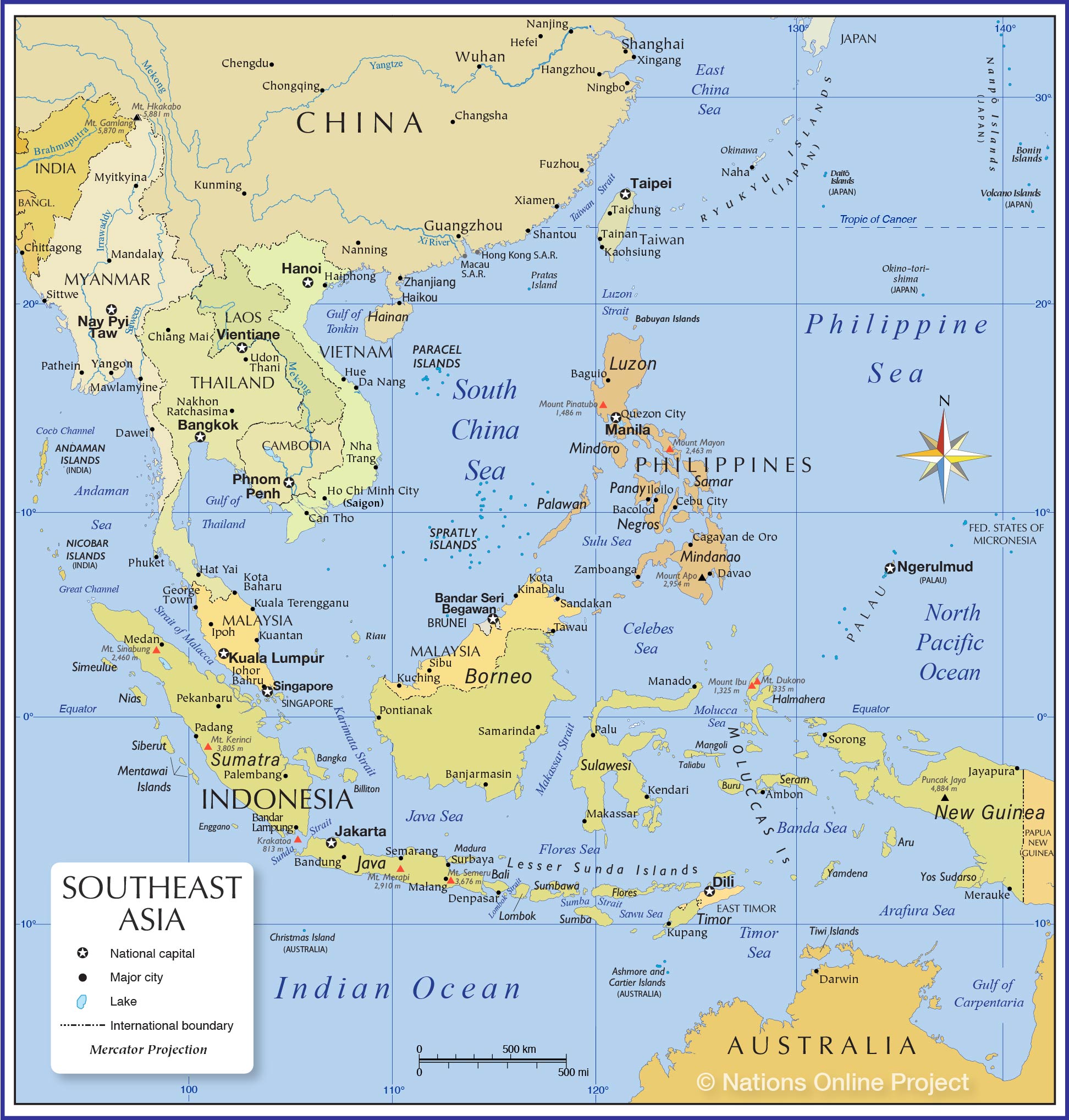
Source: Nations Online — Map of South-East Asia - Nations Online Project · www.nationsonline.org
ASEAN's Trade Strategy
Hub-and-spoke model: ASEAN at center, bilateral FTAs with major economies
ASEAN Way: Consensus-based decision making, non-interference principle
Economic integration: ASEAN Economic Community (AEC) launched in 2015
External partnerships: ASEAN Plus mechanisms for broader regional cooperation
Membership trap: ASEAN has 10 members, not 11 (Timor-Leste is observer)
Headquarters confusion: ASEAN Secretariat is in Jakarta, Indonesia
India relation trap: India has FTA with ASEAN but exited RCEP
SAARC confusion: Don't mix ASEAN (Southeast Asia) with SAARC (South Asia)
Regional Organizations: G20, SCO, SAARC Comparison
World Affairs (International Relations) G20 SCO SAARC
Key Regional Organizations: Mandates & Membership Compared
G20: Global economic governance forum (20 members)
SCO: Security-focused organization in Central/South Asia
SAARC: South Asian regional cooperation (8 members)
Regional Organizations Comparison
Organization | Full Name | Primary Focus | Key Members | India's Role |
|---|---|---|---|---|
G20 | Group of Twenty | Global economic policy | Major economies (US, China, EU, India, etc.) | Founding member, hosts 2023 summit |
SCO | Shanghai Cooperation Organisation | Security & political cooperation | China, Russia, Central Asian states | Full member since 2017 |
SAARC | South Asian Association for Regional Cooperation | South Asian regional development | India, Pakistan, Bangladesh, Sri Lanka + 4 others | Largest member, founding nation |
ASEAN | Association of Southeast Asian Nations | Southeast Asian economic integration | 10 Southeast Asian countries | Dialogue partner, not member |
Organizations by Geographic Focus
# Regional Organizations
## Global
- G20 (Economic)
- UN Security Council
- WTO
## Asia-Pacific
- ASEAN (SE Asia)
- SCO (Central Asia)
- QUAD (Indo-Pacific)
## South Asia
- SAARC
- BIMSTEC
Why Each Option Was Wrong for RCEP
G20: Focuses on global economic governance and financial stability, not specific trade agreements
SCO: Primarily addresses security threats, terrorism, and political cooperation in Central Asia
SAARC: Limited to South Asian countries; RCEP involves East Asia and Pacific nations
ASEAN: Correct answer - RCEP was conceived and initiated at ASEAN Summit in 2012
India's Membership Status
Organization | India's Status | Joined | Key Benefit |
|---|---|---|---|
G20 | Full Member | Founding member (1999) | Global economic influence |
SCO | Full Member | 2017 | Central Asian connectivity |
SAARC | Founding Member | 1985 | South Asian leadership |
ASEAN | Dialogue Partner | 1996 | Look East policy implementation |
Geographic confusion: SCO covers Central/South Asia, not Southeast Asia like ASEAN
Mandate mix-up: G20 deals with macroeconomic policy, not bilateral trade agreements
SAARC limitation: Only 8 South Asian members, cannot initiate Asia-Pacific agreements
India-ASEAN status: India is dialogue partner, not full ASEAN member