With reference to ancient India, consider the following statements: 1. The concept of Stupa is Buddhist in origin. 2. Stupa was generally a repository of relics. 3. Stupa was a votive and commemorative structure in Buddhist tradition. How many of the statements given above are correct?
Contents13
- AOnly one
- BOnly two
- CAll three
- DNone
Show answer
Answer: (B) Only two
Statement 1 is incorrect:
The concept of Stupa is NOT Buddhist in origin.
The word 'Stupa' appears in the Rigveda and other Vedic texts, so it existed before Buddhism.
Statement 2 is correct:
Stupas contained relics of Buddhist monks (e.g., Sanchi Stupa had Buddha's relics).
Statement 3 is correct:
Stupas served both votive (worship) and commemorative (memorial) purposes in Buddhism.
So only two statements are correct.
Answer is (b).
Stupas are ancient burial mounds that predate Buddhism - the word appears in Rigvedic texts before Buddha was born.
The trap here is assuming Buddhist concepts originated with Buddhism, when many were adaptations of pre-existing Vedic traditions.
Stupa Origins in Vedic Literature
Ancient And Medieval History Stupa Buddhist in origin
Stupa Origins: Pre-Buddhist Vedic Roots & UPSC Traps
Stupa appears in Rigveda and other Vedic texts — predates Buddhism
Word 'Stupa' means mound or heap in Sanskrit
Buddhism adopted the stupa concept, did not create it
Pre-Buddhist Evidence
The term Stupa appears in the Rigveda and other Vedic literature, proving its existence before Buddhism emerged in the 6th century BCE. The Sanskrit word means a mound or heap, originally referring to burial mounds or commemorative structures in Vedic culture.
Buddhist Adoption
Buddhism adapted the existing stupa concept for its own religious purposes
Early Buddhist stupas followed pre-existing architectural traditions
The religious significance and elaborate decoration developed under Buddhism
Other religions like Jainism also adopted stupa-like structures
Trap: Statement 1 claims stupas are Buddhist in origin — but they predate Buddhism
UPSC tests whether you know Buddhism adopted vs created the stupa concept
Don't confuse Buddhist development of stupas with their original invention
Stupa Functions in Buddhism
Ancient And Medieval History repository of relics votive commemorative structure
Buddhist Stupas: Reliquary, Votive & Commemorative Functions
Stupas served as repositories of relics — Buddha's remains and monks' relics
Votive function: places of worship and devotion for Buddhists
Commemorative function: memorials marking important Buddhist events
Sanchi Stupa contained Buddha's relics — classic example
Three Functions of Buddhist Stupas
Function | Purpose | Contents/Features | Examples |
|---|---|---|---|
Reliquary | House sacred remains | Buddha's relics, monks' ashes, sacred objects | Sanchi Stupa (Buddha's relics) |
Votive | Worship and devotion | Circumambulation path, offerings, prayers | All major stupas used for pradakshina |
Commemorative | Mark sacred events | Built at Buddha's birth, enlightenment, death sites | Lumbini, Bodh Gaya, Kushinagar |
Archaeological Evidence
The Sanchi Stupa in Madhya Pradesh exemplifies all three functions — it contained Buddha's relics (reliquary), served as a worship center (votive), and commemorated the Buddha's spiritual legacy. Excavations have confirmed relic deposits in stupa cores.
Statements 2 & 3 are correct — stupas were both reliquaries AND votive/commemorative
Don't think stupas served only ONE function — they were multi-purpose structures
Sanchi is the classic example UPSC uses for relic-containing stupas
Major Buddhist Stupas in India
Ancient And Medieval History Sanchi Stupa
Famous Buddhist Stupas: Architecture & Historical Significance
Sanchi Stupa (Madhya Pradesh) — most famous, contains Buddha's relics
Amaravati Stupa (Andhra Pradesh) — largest in South India
Nagarjunakonda — major Buddhist center with multiple stupas
Most stupas built during Mauryan and Gupta periods
Major Stupas & Their Features
Stupa | Location | Period | Key Features | Status |
|---|---|---|---|---|
Sanchi | Madhya Pradesh | 3rd century BCE (Ashoka) | Buddha's relics, 4 toranas, UNESCO site | Best preserved |
Amaravati | Andhra Pradesh | 2nd century BCE | Largest in South India, marble sculptures | Partially ruined |
Nagarjunakonda | Andhra Pradesh | 3rd-4th century CE | Multiple stupas, university center | Submerged (dam) |
Dhamek | Sarnath, UP | 5th century CE (Gupta) | Marks first sermon, geometric patterns | Well preserved |
Sanchi Stupa Architecture
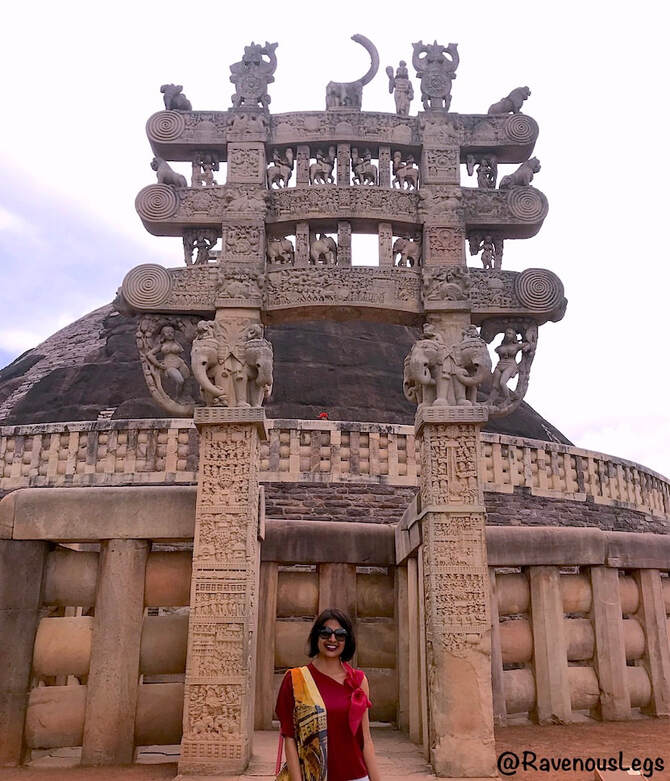
Source: RavenousLegs — Sanchi Stupa: Madhya Pradesh's Iconic Buddhist Heritage Site ... · www.ravenouslegs.com
Architectural Elements
Anda — hemispherical dome containing the relic chamber
Harmika — square railing on top representing heaven
Yashti — central pole with umbrella symbolizing cosmic axis
Vedika — stone railing around the stupa for pradakshina
Toranas — ornate gateways with Buddhist sculptures (Sanchi has 4)
Buddhist Architectural Terminology
Art And Culture
Buddhist Architecture: Key Terms & Symbolic Meanings
Pradakshina — clockwise circumambulation around stupas for worship
Chaitya — prayer hall with stupa inside
Vihara — monastery for monks' residence
Torana — ornate gateway with Buddhist sculptures
Buddhist Architectural Vocabulary
Term | Meaning | Function | Examples |
|---|---|---|---|
Stupa | Mound/dome | Reliquary, worship, memorial | Sanchi, Amaravati |
Chaitya | Prayer hall | Congregational worship with stupa inside | Karla, Bhaja caves |
Vihara | Monastery | Monks' residence and meditation | Ajanta, Ellora |
Pradakshina | Circumambulation | Clockwise worship walk around stupa | All stupas have paths |
Torana | Gateway | Ornate entrance with sculptures | Sanchi's 4 toranas |
Buddhist Monument Types
# Buddhist Architecture
## **Stupas**
- Reliquary function
- Votive worship
- Commemorative memorial
- Pradakshina path
## **Chaityas**
- Prayer halls
- Stupa inside
- Congregational worship
- Rock-cut caves
## **Viharas**
- Monastic residence
- Meditation cells
- Community halls
- LibrariesDon't confuse Chaitya (prayer hall) with Stupa (the dome structure itself)
Pradakshina is always clockwise — not random circumambulation
Vihara = monastery, Chaitya = prayer hall — UPSC tests this distinction