Consider the following pairs:
Contents14
Consider the following pairs:
| Site | Well known for | |
|---|---|---|
| 1. | Besnagar | Shaivite cave shrine |
| 2. | Bhaja | Buddhist cave shrine |
| 3. | Sittanavasal | Jain cave shrine |
How many of the above pairs are correctly matched?
- AOnly one
- BOnly two
- CAll three
- DNone
Show answer
Answer: (B) Only two
Pair 1 is wrong:
Besnagar is a Vaishnavite (not Shaivite) site — the Greek ambassador Heliodorus erected a pillar to Lord Vasudeva here.
Pair 2 is correct:
Bhaja caves in Pune are Buddhist cave shrines.
Pair 3 is correct:
Sittanavasal in Tamil Nadu is a Jain cave shrine from the 2nd century with famous murals.
Only two are correct.
Answer is (b).
Cave shrines represent the three major religious traditions of ancient India - Hindu, Buddhist, and Jain - each with distinct architectural and artistic features.
Besnagar is famous for the Heliodorus pillar erected by a Greek ambassador who converted to Vaishnavism, making it a Vaishnavite site, not Shaivite.
The question tests precise knowledge of religious site associations rather than general awareness of cave temple locations.
Besnagar & Heliodorus Pillar
Ancient And Medieval History Besnagar Shaivite
Besnagar: The Vaishnavite Site with Greek Connection
Besnagar is a Vaishnavite site in Madhya Pradesh, not Shaivite
Heliodorus, Greek ambassador, erected a Garuda pillar to Lord Vasudeva here
Dates to 2nd century BCE during Shunga period
Historical Significance
Besnagar in Madhya Pradesh represents early Indo-Greek cultural synthesis. The site proves that Vaishnavism had gained foreign converts by the 2nd century BCE.
Key Features
Heliodorus Pillar - erected by Greek ambassador to Taxila
Dedicated to Lord Vasudeva (Krishna), establishing early Vaishnavite worship
Inscription calls Heliodorus a Bhagavata (devotee of Vishnu)
Shows Greek adoption of Indian religious practices
Trap: UPSC tests Vaishnavite vs Shaivite confusion - Besnagar is Vaishnavite
Common error: Mixing up Greek Heliodorus with other foreign ambassadors
Remember: Garuda pillar indicates Vishnu worship, not Shiva
Bhaja Buddhist Caves
Ancient And Medieval History Bhaja Buddhist cave shrine
Bhaja Caves: Early Buddhist Rock-Cut Architecture
Bhaja caves in Pune are Buddhist cave shrines from 2nd century BCE
Contains chaitya hall and viharas representing Hinayana tradition
Part of Western Ghats rock-cut cave complex
Architectural Features
Bhaja represents early Hinayana Buddhist architecture with distinctive horseshoe-shaped chaitya hall entrance and residential viharas for monks.
Key Elements
Chaitya Hall - prayer hall with stupa at the end
Viharas - residential cells for Buddhist monks
Horseshoe arch - characteristic entrance design
No Buddha images - follows Hinayana symbolic tradition
Cave Architecture
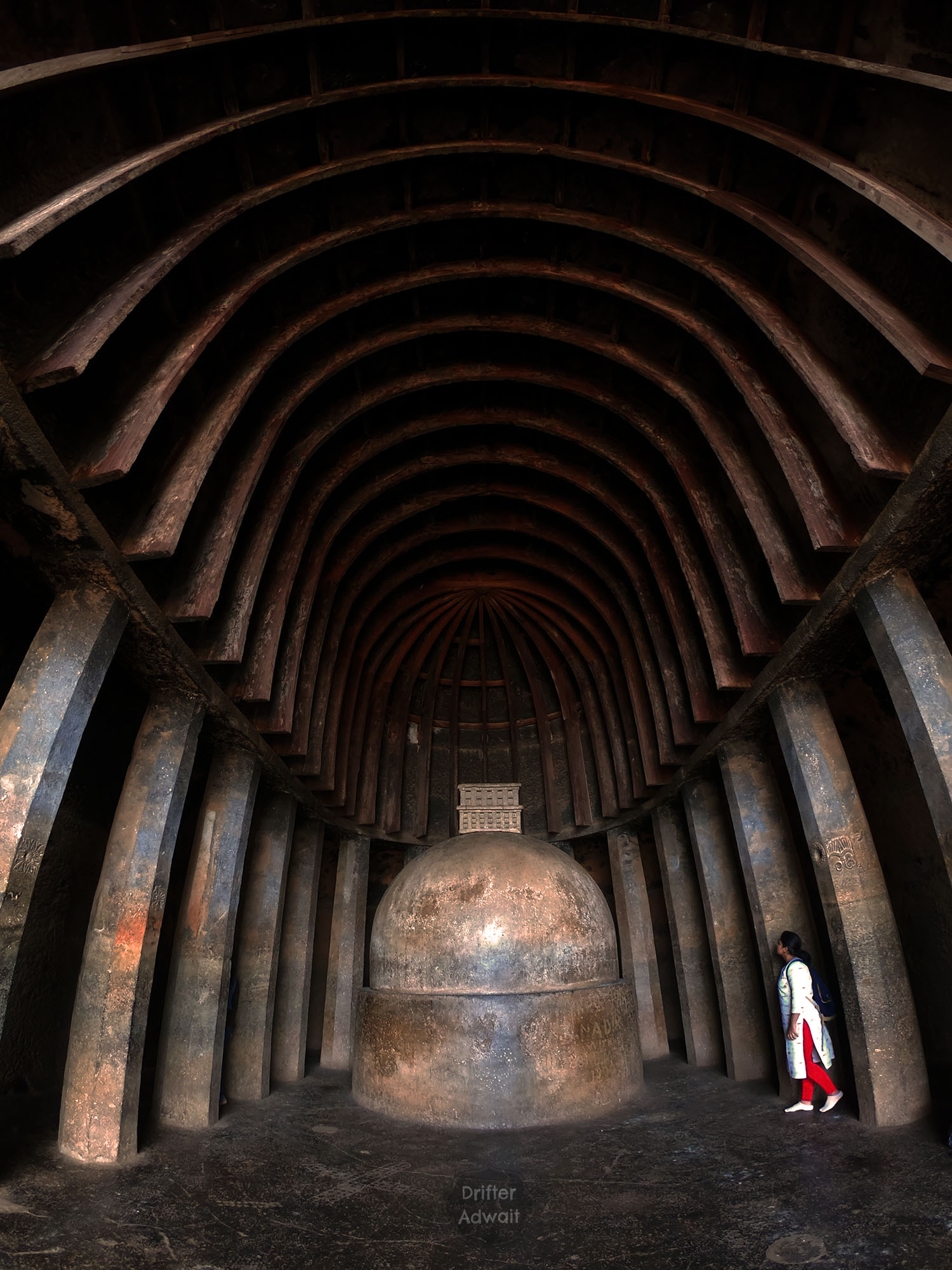
Source: Drifter Adwait — Bhaja Caves · drifteradwait.com
Sittanavasal Jain Cave
Ancient And Medieval History Sittanavasal Jain cave shrine
Sittanavasal: Tamil Nadu's Jain Artistic Marvel
Sittanavasal in Tamil Nadu is a Jain cave shrine from 2nd century CE
Famous for lotus pond murals and Pandya period patronage
Represents Tamil Jainism during early medieval period
Cultural Context
Sittanavasal demonstrates Jain influence in Tamil Nadu under Pandya rulers. The site bridges early Jainism with later Tamil devotional traditions.
Distinctive Features
Lotus pond ceiling - famous fresco showing celestial beings
Jain Tirthankara images carved in natural rock formations
Brahmi inscriptions indicating early Tamil-Jain interaction
Pandya royal patronage evident from architectural style
Jain Frescoes
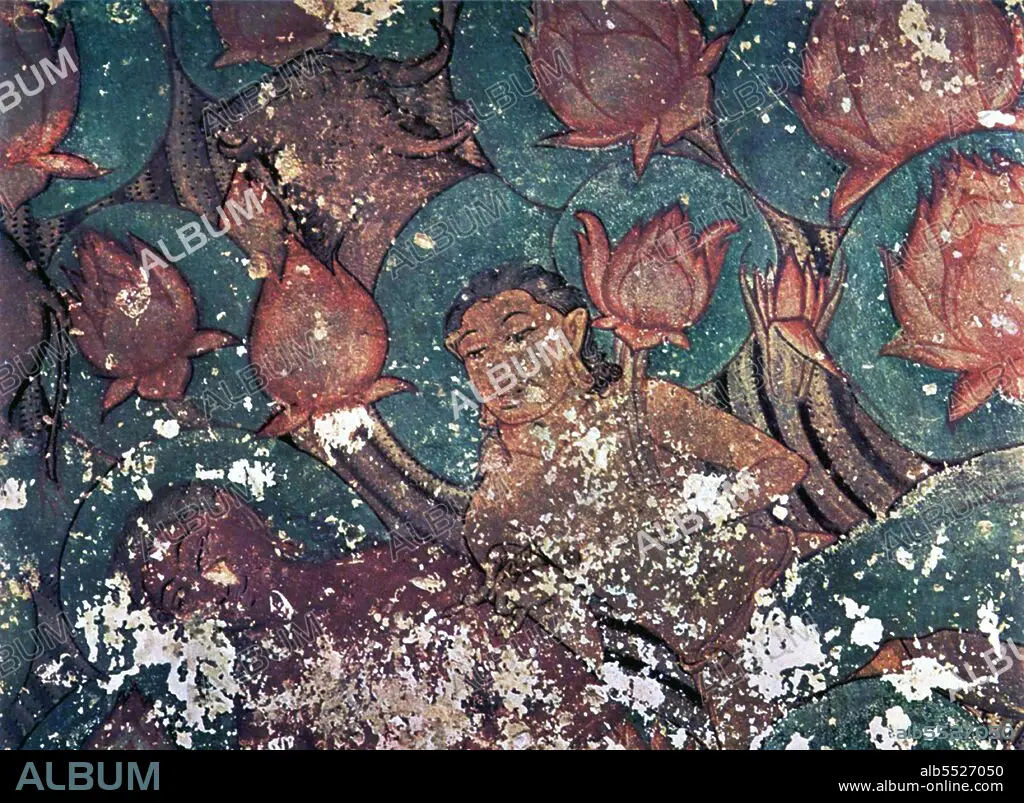
Source: Album Online — India: Lotus-gatherer. Mural from the Jain cave complex at ... · www.album-online.com
Religious Cave Architecture Traditions
Ancient And Medieval History
Cave Architecture Across Indian Religious Traditions
Three major traditions: Buddhist, Hindu, and Jain cave architecture
Western Ghats concentration: Ajanta, Ellora, Karla, Bhaja complexes
Religious Cave Traditions
Tradition | Key Sites | Distinctive Features | Peak Period |
|---|---|---|---|
Buddhist | Ajanta, Karla, Bhaja | Chaitya halls, Viharas, Stupas | 2nd BCE - 2nd CE |
Hindu | Ellora, Elephanta | Temple layout, Deity sculptures | 5th - 8th CE |
Jain | Sittanavasal, Ellora | Tirthankara images, Geometric patterns | 2nd - 10th CE |
Cave Architecture Elements
# Indian Cave Architecture
## Buddhist
- Chaitya halls
- Viharas
- Stupa worship
- Horseshoe arches
## Hindu
- Sanctum sanctorum
- Pillared halls
- Deity sculptures
- Mandapa
## Jain
- Tirthankara images
- Geometric designs
- Ceiling frescoes
- InscriptionsTrap: Vaishnavite vs Shaivite sites - Besnagar is Vaishnavite (Garuda pillar)
Common confusion: Mixing cave shrines with structural temples
Remember: Western Ghats = major cave concentration, not Vindhyas